




Talane – President Cyril Ramaphosa says South Africans won’t celebrate this year won’t celebrate going to a new year like they did in the previous years.
“Unfortunately for us here in SA and for others around the world, there is little cause for celebration this year,” said Ramaphosa.
Ramaphosa showed concern about South Africa’s passing “the mark of more thas one million confirmed coronavirus cases in our country. Nearly 27, 000 South Africans are known to have died from Covid-19. More than 50,000 new cases have been reported since Christmas Eve.”
The President says myriads of reported cases emanate from Western Cape, KwaZulu-Natal, Gauteng and Eastern Cape, and currently Limpopo is seen a rise in Covid-19 infections.
Ramaphosa highlighted that the cause of contracting the disease is because, “as human beings, we are social beings and have a need to socialise with one another. We feel the need to visit friends and family, we attend religious services and we go yo parties.”
Ramaphosa just confirmed the allegations that there is a new variant of Covid-19 believed to be detrimental than the one we encountered in the first wave.
The new variant is called 501. V2, scientists say “its spread, it appears that it may be more contagious than the virus that drove the first wave of infections.”
South Africa have seen a rampid increment in infections “being field by so-called super-spreader events” such as family and social gatherings, and music and cultural events.
Ramaphosa says South Africans were not wearing masks, failed to keep a safe distance from others and kept hosting and attending “social gatherings and events that in many cases flout public health regulations… Soctal gatherings substantially increase the risk of transmission.”
Venues are poorly ventilated and number of permitted people to be present at such venues were exceeded.
Alcohol consumption in taverns and nightclubs promoted behaviour of not wearing masks, putting people at more risk of contracting the disease.
Alcohol caused trauma cases to increase, disrupting healthcare workers from focusing on those catched Covid-19.
“According to the data qw have, with every relaxation of the restrictions on the sale of alcohol, the number of trauma cases reporting at our hospitals has increased. These trauma cases are putting an unnecessary strain on our already stretched public health facilities,” said Ramaphosa.
He added that “our hospitals, both private and public, are already close to full capacity in a number of provinces, ICU beds are either full already or rapidly filling up.”
In the Eastern Cape, there’s been a rampid increment of hospitalisations and “in-hospital deaths” which moved past the number witnessed in the first wave of Covid-19.
Frontline healthcare workers are increasingly infected by the virus whilst they are struggling to cope with the strain of the second wave.
“During the month of December, 4,630 public sector health employees contracted Covid-19, bringing the total number infected since the start of the pandemic to over 41,000,” said President Ramaphosa.
He said frontline healthcare workers could lose more of their lives and their clan will shed tears all because of actions of South Africans who are failing to comply with lockdown guidelines, getting infected, getting hospitalised and infecting those at hospitals to care for them.
Restrictions under level 3 of lockdown:
- All indoor and outdoor gatherings will be prohibited for 14 days with exceptions to funerals and other limited exceptions as detailed in the regulations, such as restaurants, museums, gyms and casinos. These will further be set out by the Minister in regulations and will be reviewed after that period.
- Funerals may not be attended by more than 50 people with social distancing.
- Every business premises must determine the maximum number of staff and customers permitted at any one time based South African social-distancing guidelines and may not exceed the limit.
- The nationwide curfew will be extended from 23:00 to 06:00. Apart from permitted workers and for medical and security emergencies, nobody is allowed outside their place of residence during curfew.
- Non-essential establishments, such as shops, restaurants, bars and cultural venues, must close at 20:00. Ramaphosa said the list of establishmeans will be released shortly.
- The sale of alcohol from retail outlets and the on-site consumption of alcohol is prohibited, including the distribution and transportation thereof.
- The prohition of drinking alcohol in public spaces such as parks and beaches remains.
Ramaphosa says we are all fully aware of the most simplest way of curbing the virus is to wear a cloth mask that covers both the mouth and the nose, though the government find it best to bring in place, adjusted level 3 regulations which will make every person legally responsible for wearing the mask in public as it is compulsory to do so.
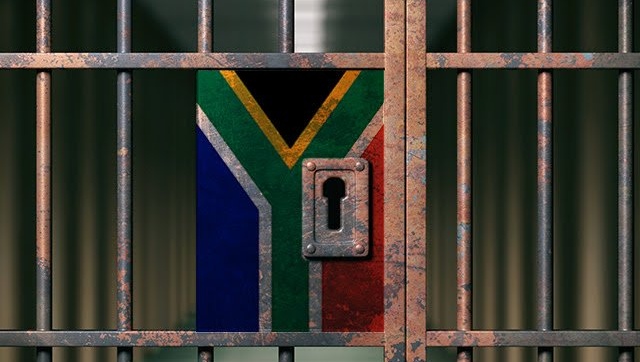
To those failing to comply with the adjusted level 3 regulations “could be arrested and prosecuted. On conviction, they will be liable to a fine or to imprisonment for a period not exceeding six months or to both a fine and imprisonment.”
The level 3 regulations are effective or in place until the 15th of January 2021, and prone to abandonment hinging on the state of the pandemic when reviewed in January 2021.
Additional and strictest will apply to municipalities previously identified as hotspots until the situation lessens.
STUF News